Tuesday, February 20, 2018

Mamshit - Remains of a Nabatean Town


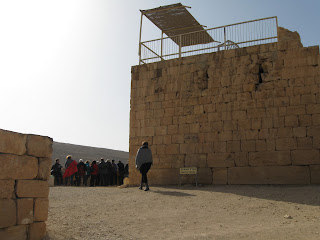
Mamshit, ancient Nabatean town, was declared  by UNESCO a World Heritage site, in 2005.  It is located in the desert, near the modern city of Dimona, not very far from the Dead Sea.

Sign with the name 'Mamshit' , and a map 

In antiquity , Mamshit used to be a town of wealthy people who traded in spices, textiles, precious stones/ metals, exotic fragrances - all the things needed for a good life style. The Nabateans of Mamshit also raised arabian horses and that brought them a nice fortune.

The place has become now a National Park with  a Visitors' Center,  camping  facilities,  tents, parking spots, etc.. On holidays, the ancient restored market comes to life together with various exciting leisure activities for both adults and kids. There is potential for more excavations, and there's still a lot to be restored on the site.


to the Visitors'  Center  on the north side of Mamshit

entering  the Visitors' Center

souvenir shop, maps, tickets, leaflets

 people waiting outside for the guide to go to the ruins

There's a trail leading from the Visitors' Center to the main gate of the ancient city.

the gate to the city

The sun was strong, and a light, but stubborn wind, was blowing. I had to take my cap off for fear it'll be carried away by the wind. Nevertheless, it was perfect weather for wandering about in the desert, among the restored houses and streets of Mamshit, for over two hours.

cap in hand

strong sun and naughty wind in the desert

listening to the guide


There was a lot to be seen:
- houses with 1- 2 stories, several rooms, a courtyard, staircase,  arches; wide streets separating neighboring houses.
- two impessive churches built on the highest points in the city - a western one (the Nilus church) with an intricate mosaic  floor, and a eastern one (the Martyrs' church) with small  marble pillars.
- a bathouse, a public reservoir, a market, stables (for the  arabian horses), frescoes in  one of the mansions, a flour mill.
- dams  along the bed of the adjacent  Mamshit stream, two towerwatches and lookouts overlooking Mamshit, Dimona, the Arava valley.
- structures waiting for reconstruction, and more...

house
        
street


     tower, lookout offering panoramic sights            
      
     western Nilus church with a mosic floor        

market  place

frescoes
       
  frescoes            

Remarks:

a.    The Nabateans - arab tribes later converted to Cristianity.

b.   In the house with the frescoes archeologists found a huge amount of silver coins under a staircase.

c.  In the eastern church, archeologists found human bones, probably the bones of those whom they call martyrs.               


Tuesday, February 13, 2018

Cochin - Nevatim (Part Two - the synagogue)


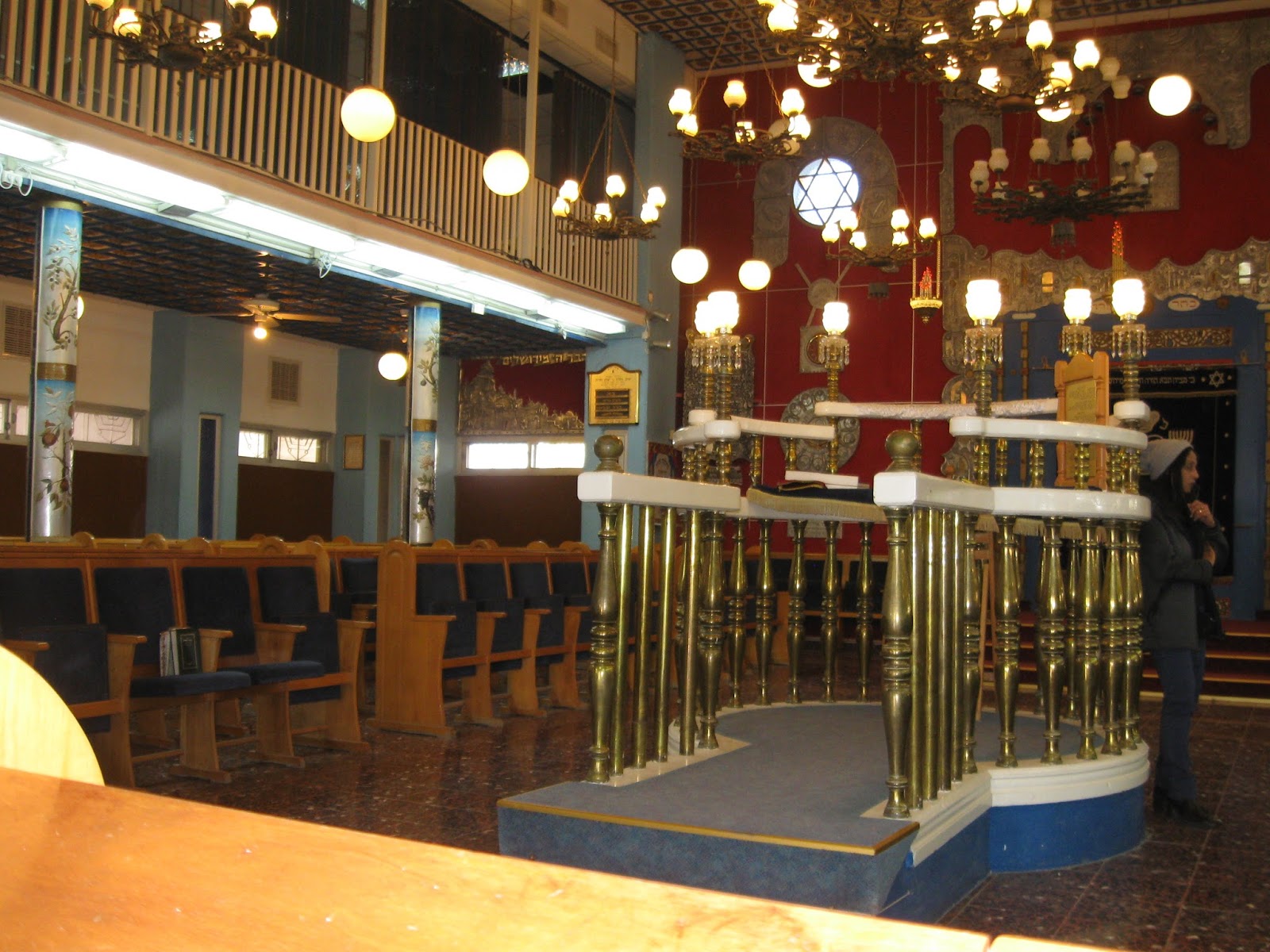
The  synagogue - plain outside,  stunning inside. It is built in the style of the Kerala (south-west India) ancient synagogues, specifically that of Cochin. 
*
There are some blue benches in front of the building, and a dark blue engraved prayer  (the moon prayer) hanging near the entrance


the facade of the synagogue building

the moon prayer - in Cochin  tradition


Upon entering the synagogue, I stood breathless for the first few moments.  Never ever had I seen such beauty, such richness of detail and color, lights and pillars, fine furniture and ornaments -  in a relatively compact interior!

the interior, at first sight

The central part of the synagogue  is taken by the Holy Ark ( the wooden closet which contains the Torah scrolls) , and in front of it - the bimah (the podium) for Torah readings. There's a second bimah on the upper floor, the ladies'  floor.


                    the Holy Ark with a dark blue velvet curtain on its door

the bimah (podium) where prayers and Torah readings are done

listening to Mira's lecture; see the gorgeous ceiling

more audience; 

the balcony, the adorned pillars, the chairs

see the ornaments on both sides of the Holy Ark

Sadly, several years ago, someone broke a window and stole some valuable items. I hope the lesson was learnt and security reinforced.

Monday, February 5, 2018

Cochin - Nevatim. ( Part One - the museum)


From Cochin (Kerala, India) to Nevatim (Neghev, Israel) - a small indian-jewish community with a great history, an amazing little museum, and a stunning synagogue.

We reached Nevatim agricultural settlement at noon. After  passing a big, brown sign with the name 'moshav Nevatim'  in hebrew (see the header), and a traditional well  in memory of the founders, we were led by Mira, the local guide, to the building which houses a compact museum with some very interesting exhibits.

traditional well in memory of the founders

the well - closer view

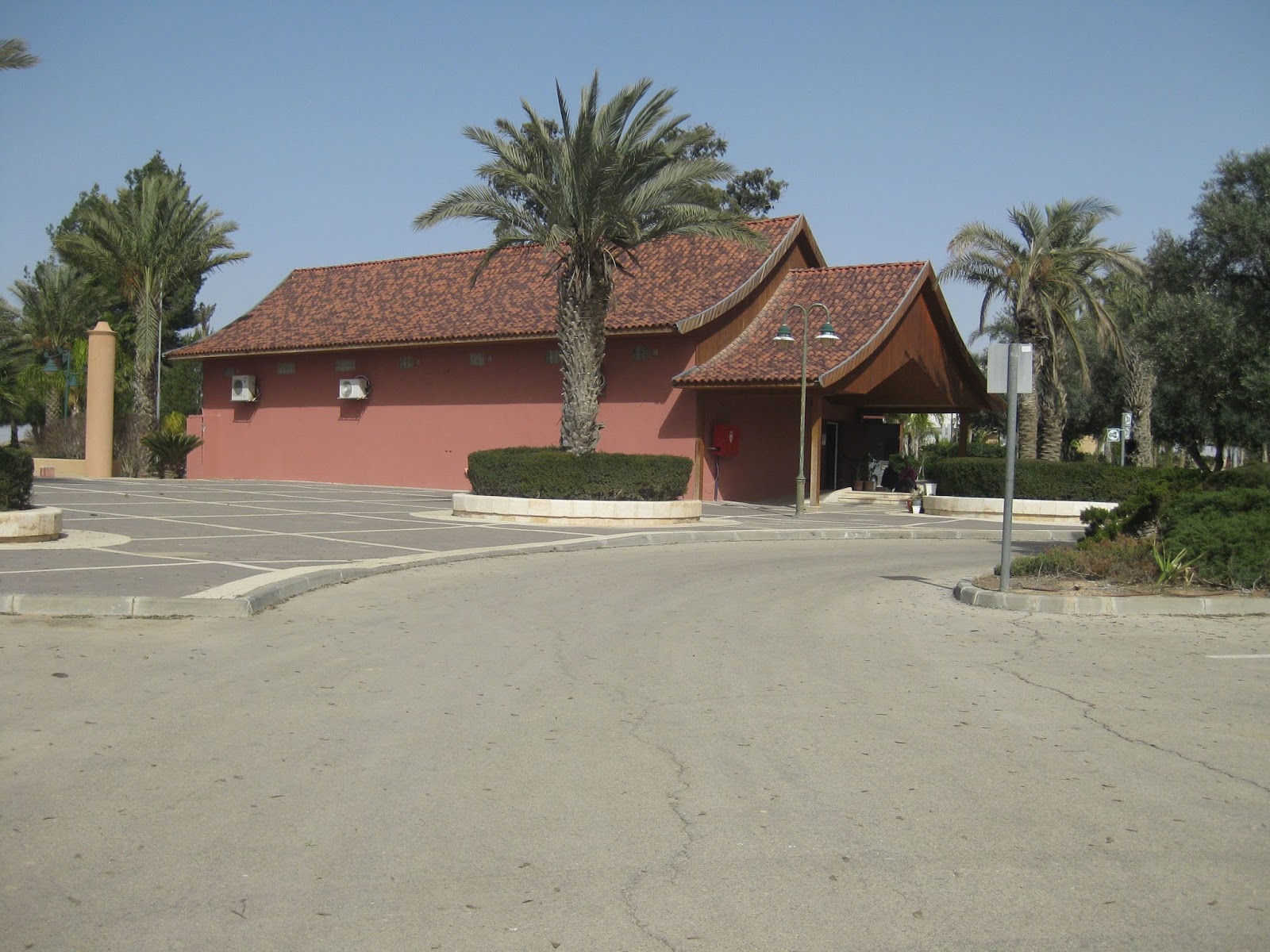
building that houses the Heritage museum

front view of the building

entrance to building housing the museum

After a few introductory words, Mira, the guide, wanted us to watch a 16-minute documentary on the history and customs of her community and its immigration to Israel. Very captivating film  as it included  interviews with people who were among the first settlers of Nevatim, in 1954.


Mira - her back to screen, face to visitors

The walls  at the entrance and in the movie room were covered with black&white pictures depicting snippets from the community's life in India. (It is important to mention that they've had good relations with their non-jewish neighbors there ; no hostility/persecution experience whatsoever). 

listening to lecture;  pictures with life snippets on the walls

more  Cochin life snippets on the wall

Merchants in Cochin, they became farmers in Nevatim - not an easy transition, that from trade to agriculture. Apparently, the shy and modest indian community underwent this transition quite well. They  also got this small tourist attraction enterprise  - the Heritage Center which includes the museum and the synagogue.

Next  - open rooms with  a rich variety of encased exhibits from daily life in Cochin: clothing (daily and holiday),  jewelery items, household ware, religious and cultural artifacts (light holders, holiday lamps, Torah case) etc.


wedding clothes

bracelets

wedding rings


household ware

chandeliers

standing light holder

Hannukah lamp

Torah case


overview - room with lightholders and the Torah case